
+86-536-7951951




Rigid groove coupling for fire extinguishing systems: prices 2026
2026-08-17
- Rigid groove coupling for fire extinguishing systems: prices, selection and technical standards 2026
- What is a rigid groove coupling and its role in fire safety
- Where is a rigid groove coupling used for fire extinguishing systems?
- Technical specifications and compliance standards in 2026
- How to choose a rigid groove coupling for fire extinguishing systems: step-by-step algorithm
- An example of a reliable manufacturer: Shandong Jiasheng LLC
- Model Comparison: Rigid vs Flexible Couplings
- Price Range and Cost Factors in 2026
- Typical mistakes during selection and installation
- Logistics, storage and export nuances
- FAQ: Frequently asked questions
- Recommendations for purchasing and concluding a contract
- Conclusion
Rigid groove coupling for fire extinguishing systems: prices, selection and technical standards 2026
Rigid groove coupling for fire extinguishing systemsis a critical connection element ensuring the tightness and structural integrity of high pressure pipelines. Unlike flexible counterparts, a rigid connection completely eliminates angular displacement and axial movement of pipes, creating a monolithic structure that can withstand extreme water hammer when activated by sprinkler or deluge systems. In the context of tightening fire safety standards in the Russian Federation and the EAEU countries by 2026, the requirements for the reliability of such connections have reached peak values. Design engineers are increasingly choosing Groove-type rigid couplings due to their ability to maintain pipeline geometry at pressures above 2.5 MPa and temperatures up to +120°C.
The relevance of the topic is determined not only by technical characteristics, but also by economic feasibility. Welded joints traditionally used in firefighting require qualified personnel, non-destructive testing of seams and long installation times. A rigid groove coupling can reduce assembly time by 60-70%, which directly affects the cost of putting the facility into operation. However, the market in 2026 is characterized by high volatility in prices for steel and cast iron, as well as the emergence of many counterfeit products that do not comply with GOST R 53280 and international UL/FM standards. This material serves as a comprehensive guide for purchasers, chief engineers and designers, helping to understand pricing, technical selection nuances and logistics risks when supplying these components.
What is a rigid groove coupling and its role in fire safety
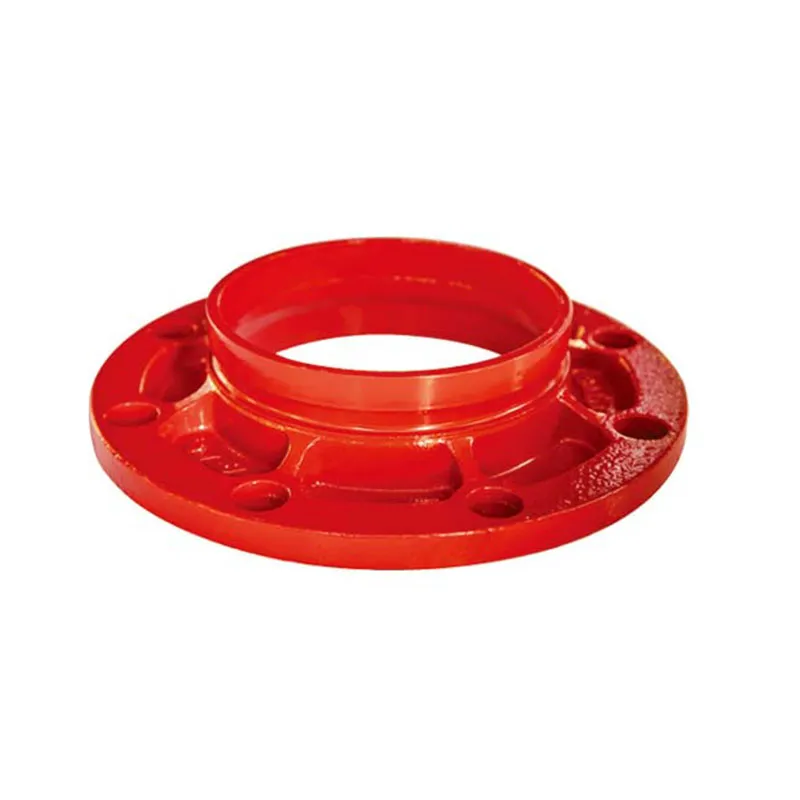
Groove connection (from English.groove- groove, groove) is a method of weldless joining of pipes, using a special profile applied to the ends of pipe blanks.Rigid groove coupling for fire extinguishing systemsconsists of two body halves (usually ductile iron or ductile iron), an O-ring (gasket) and a set of bolts and nuts. The key feature of the “rigid” modification lies in the design of the housing: the internal protrusions of the coupling fit tightly into the grooves of the pipes, mechanically blocking any possibility of rotation or longitudinal shift.
In the context of fire extinguishing systems this is of fundamental importance. When the system is activated, the water pressure increases sharply from zero to operating pressure (often 1.0–1.6 MPa, and in pumping stations up to 2.5 MPa and higher) in a fraction of a second. This hydraulic shock creates significant axial loads. If flexible couplings are used on straight sections or at points of attachment to equipment, the pipeline may experience unintended displacements, which will lead to depressurization or destruction of the fasteners. A rigid coupling transfers axial loads directly to the pipe, requiring the correct calculation of intermediate supports.
Design features and materials
The quality of a coupling is determined by three components:
- Housing:It is made of ductile iron (high-strength nodular cast iron) of class no less than 450-10 according to ISO 1083. The use of gray cast iron is unacceptable due to its fragility under impact loads. The housing coating must be corrosion-resistant: epoxy powder coating with a thickness of at least 80 microns or hot-dip galvanizing.
- O-ring:The most vulnerable element. For fire extinguishing systems, EPDM (ethylene-propylene rubber) Grade E rubber is used. It remains elastic in the range from -40°C to +110°C, and is resistant to aging and water. Important: foam fire extinguishing systems require special rubber that is resistant to the chemical effects of foaming agents.
- Fasteners:Bolts in stainless steel A2/A4 or galvanized steel, strength class 8.8. Bolt heads are often specially shaped to prevent turning when installed with a single wrench.
Where is a rigid groove coupling used for fire extinguishing systems?
The scope of application of rigid groove connections is strictly regulated by design solutions. Incorrect installation of a rigid coupling instead of a flexible one (or vice versa) is one of the most common causes of accidents during hydraulic testing. Below are the main scenarios where using a rigid type is mandatory or recommended.
1. Pumping stations and inlet units
In fire pump rooms, vibration from engine operation and high dynamic pressures require maximum piping stability. A rigid groove coupling for fire extinguishing systems is installed here at the outlet of the pump (after vibration inserts) and on the collectors. It ensures the alignment of the flange connections of gate valves and check valves, preventing misalignment that could lead to jamming of the shut-off valves at a critical moment.
2. Vertical risers of multi-storey buildings
When installing vertical pipelines in skyscrapers or industrial workshops more than 10 meters high, the weight of the water column creates a huge load on the lower floors. Rigid couplings are used to create a continuous rigid line that is supported by load-bearing stirrups every 3-4 meters. This allows the weight of the pipe and water to be distributed onto the building structure rather than onto the connections themselves.
3. Underground communications and tunnels
In the limited space of subway tunnels or underground parking lots, where welding work is prohibited due to fire hazards or ventilation, groove joints become the only option. The rigid type is necessary when laying straight sections underground where the soil can put pressure on the pipe to prevent the joint from breaking.
4. Large diameter trunk lines (DN100-DN300)
The larger the diameter of the pipe, the higher the inertia of the flow during water hammer. For diameters above DN100 mm, design institutes almost always prescribe the use of rigid connections in straight sections to ensure the design stiffness of the contour.
Technical specifications and compliance standards in 2026
The industrial valves market in Russia and the CIS countries in 2026 operates under conditions of dual regulation: on the one hand, there are national standards (GOST), on the other - the requirements of international certificates (UL, FM, LPCB), which are often requested by foreign customers or large Russian corporations with export obligations.
| Parameter | Value/Standard | Engineer's comment |
|---|---|---|
| Working pressure (PN) | up to 2.5 MPa (25 bar) | Standard for most sprinkler systems. High rise buildings may require 4.0 MPa couplings. |
| Test pressure | 3.75 MPa – 5.0 MPa | Must exceed the working minimum by 1.5 times according to SP 485.1311500.2020. |
| Temperature range | -40°C … +110°C | Critical for unheated warehouses and attics. |
| Housing material | HF cast iron (GGG-40/45/50) | Checking the markings on the body is mandatory. Lack of markings is a sign of counterfeit. |
| Seal type | EPDM (Grade E) | The color of rubber is usually red or black. Must have a fire safety certificate. |
| Certification | EAS, GOST R, UL/FM (optional) | The presence of the EAEU TR 043/2017 declaration is required for sale in the Russian Federation. |
| Coverage | Epoxy Powder / Zinc | The thickness of the layer affects the service life in aggressive environments. |
It is important to note that in 2024-2025, some SP (Code of Rules) standards regarding the seismic resistance of fire extinguishing systems were updated. A rigid groove coupling for fire extinguishing systems must pass cyclic load tests if the facility is located in an earthquake-prone area. This requires additional test reports from the manufacturer.
How to choose a rigid groove coupling for fire extinguishing systems: step-by-step algorithm
Selecting connecting elements is not just about choosing the diameter. An error in pressure class or seal material can cost millions in losses in the event of a false alarm or a real accident. The following algorithm is based on the experience of completing large industrial facilities.
Step 1: Determine operating pressure and safety factor
Do not rely solely on the pump pressure rating. Take into account water hammer. If the pump produces 1.6 MPa, select couplings rated at least 2.5 MPa. A safety margin of 1.5 times is an engineering safety standard. For systems with diesel drivers, where the start-up is sharper, the margin should be even higher.
Step 2: Check pipe compatibility
Groove couplings are sensitive to groove geometry. There are standards:
- AWWA C606:American standard, most common for imported pipes and couplings.
- ISO 6182:International standard.
- GOST R 53280:Russian standard.
The dimensions of the groove (depth, width, distance from the end) may differ by fractions of a millimeter between standards. An attempt to install an AWWA standard coupling on a pipe rolled in accordance with GOST may result in the coupling not closing or leaking. Always ask the supplier for a cross-reference chart.
Step 3: Analyze the Operating Environment
If the system is constantly filled with water (wet systems), the corrosion resistance of the housing is important. If the system is dry (pressurized air) or used in a chemically aggressive environment (fertilizer warehouses, paint shops), standard EPDM rubber can quickly degrade. In such cases, consultation with the supplier’s technologist is required to select special rubber (for example, Nitrile or Fluoroelastomer), although this significantly increases the cost of the product.
Step 4: Manufacturer Verification
There are many floating brands in the 2026 market. Check:
- Availability of our own foundry (photos of workshops, video).
- Real test reports, not just pretty certificates.
- Reviews from major installation organizations.
Avoid manufacturers who cannot provide a sample for a test build. A high-quality coupling should be assembled by hand, without excessive force, and the bolts should be tightened with a precise torque.
An example of a reliable manufacturer: Shandong Jiasheng LLC
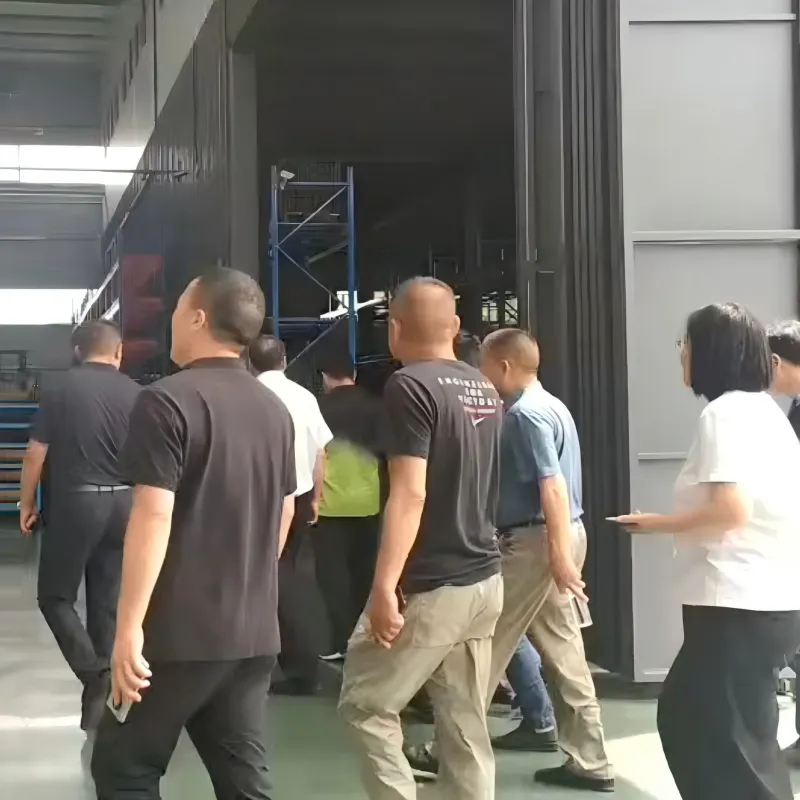
For those looking for a proven partner that meets the strict requirements of 2026, a case in point isShandong Jiasheng Machinery Manufacturing Co.,Ltd" Located in Fangzi District of Weifang City (Shandong Province), the company is a modern operating structure based on the many years of experience of Weifang Jiasheng, which has been operating since 2009.
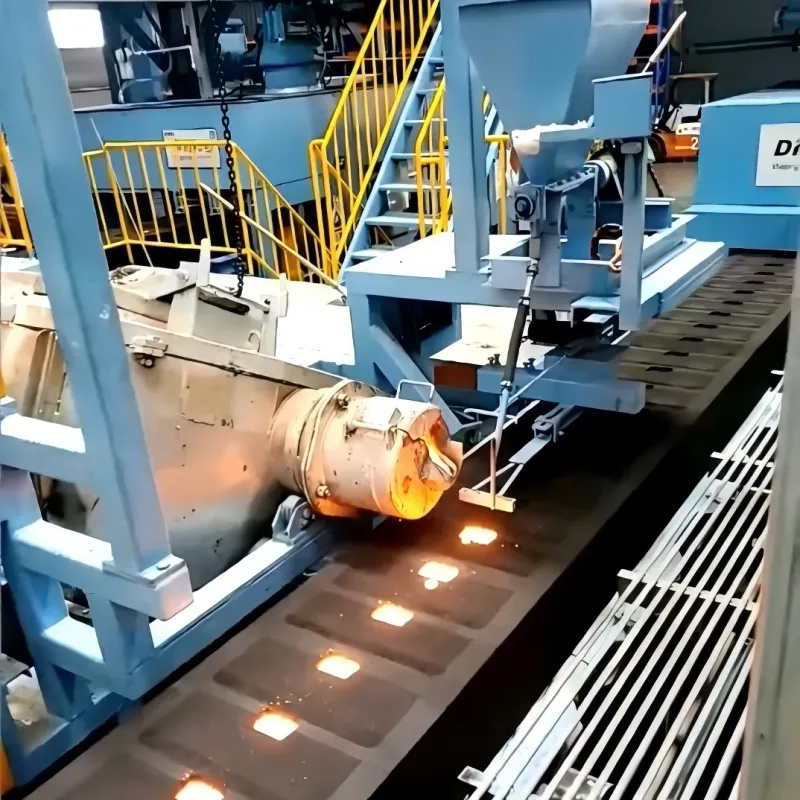
Shandong Jiasheng's production base covers more than 10,000 square meters and is equipped with world-class advanced equipment, including Disa416 and Benchuang 418 automatic molding lines, as well as intelligent quality control systems. The annual capacity of the enterprise reaches 11,000 tons of products, which allows for stable supplies even for the largest infrastructure projects.
The company's products fully comply with the high standards described above:
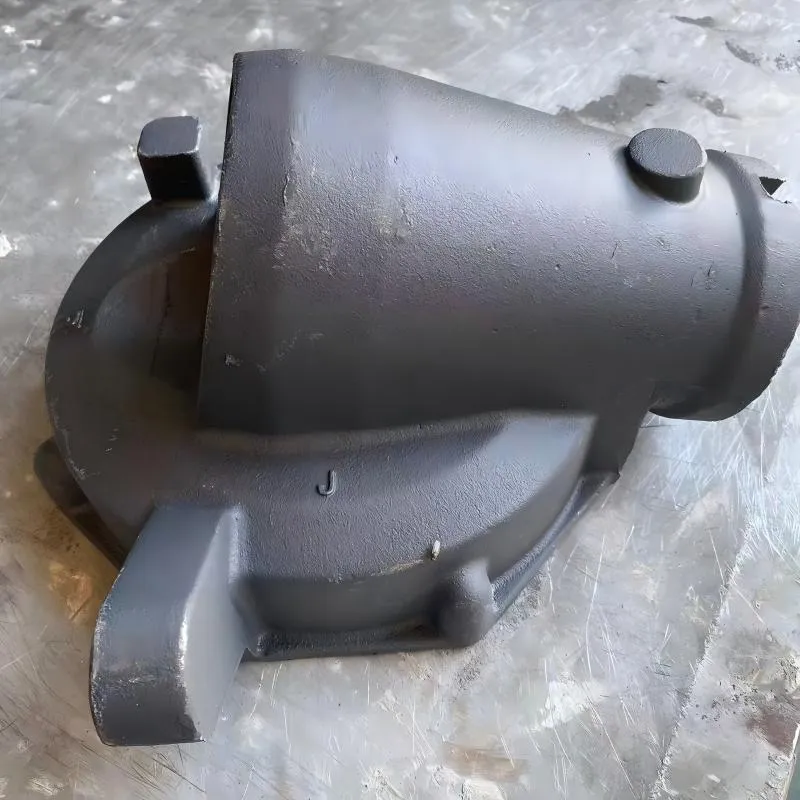
- Materials:The housings are made of high-strength nodular cast iron QT450-12, which guarantees resistance to water hammer. The seals are made of high-quality EPDM, and the fasteners correspond to strength class 8.8.
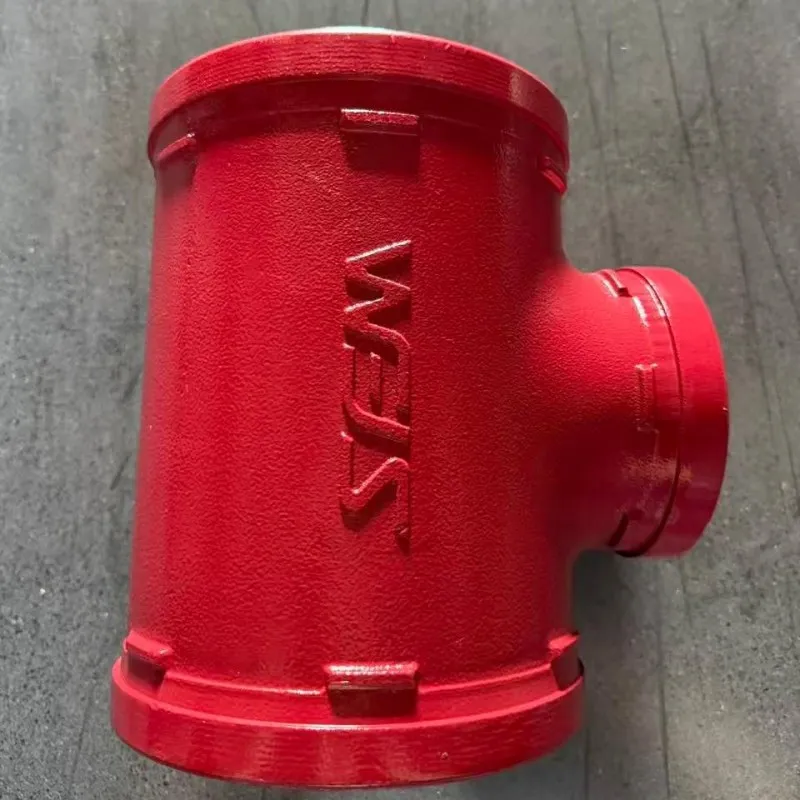
- Assortment:In addition to rigid couplings, the company produces a full range of fittings (tees, crosses, flanges), as well as complex fittings: ZSFY alarm valves, ESFR and ZSTMB sprinklers, flow indicators and fire hydrants.
- Certification:Quality is confirmed by CCCF, ISO9001, ISO14001 and ISO45001 certificates. The products are tested by the National Fire Extinguishing Systems Quality Control Center and comply with the GB5135.11 standard.
Our experience of supplying more than 30 provinces in China and participating in projects to build hospitals, shopping centers and railway junctions demonstrates Shandong Jiasheng's ability to solve complex engineering problems. The company also offers OEM services and personalized technical support, responding to customer requests within 24 hours.
Model Comparison: Rigid vs Flexible Couplings
The question often arises: why not use flexible couplings everywhere, since they are easier to install and compensate for unevenness? The answer lies in the physics of the process. Below is a detailed comparison to justify your choice.
| Criterion | Rigid groove coupling | Flexible groove coupling |
|---|---|---|
| Axial load | Transfers the load to the pipe (requires supports) | Absorbs load (reduces support requirements) |
| Angular deviation | 0 degrees (full fixation) | Up to 1-3 degrees (depending on diameter) |
| Application | Straight sections, pumping stations, risers, entry into buildings | Vibration compensation, complex routes, connection to equipment |
| Cost | Usually 10-15% cheaper than flexible ones | More expensive due to the complex design of the case |
| Risk of leakage due to water hammer | Minimum (with proper pipe fastening) | Medium (possible “tearing out” of the pipe from the groove in the absence of retaining rings) |
| Installation | Requires precise pipe alignment | Forgives minor misalignments |
Engineering opinion:Using only flexible couplings on a long straight section of 50 meters will lead to the fact that when water is supplied, the entire pipeline can “play” like an accordion, moving several centimeters. This will break the fastenings to the ceiling or walls. Therefore, the correct design is alternation: rigid couplings create rigid sections that are securely secured with clamps, and flexible couplings are placed only at points of change of direction or connection to vibrating equipment.
Price Range and Cost Factors in 2026
Pricing forrigid groove coupling for fire extinguishing systemsin 2026 is influenced by several macroeconomic and industry factors. Understanding these drivers will help buyers plan their budget and avoid overpricing.
Current market range (estimated)
Prices are indicated per unit of goods without VAT, for wholesale quantities (from 100 pcs.):
- DN 50 (2″):350 – 600 rub.
- DN 80 (3″):550 – 900 rub.
- DN 100 (4″):800 – 1300 rub.
- DN 150 (6″):1800 – 2800 rub.
- DN 200 (8″):3500 – 5500 rub.
Note: Prices for UL/FM certified products may be 2-3 times higher due to licensing fees and quality control.
What affects the cost?
- Cast iron weight:Some manufacturers save on material by making the walls thinner. This reduces the price, but critically reduces strength. Compare the weight of different brands of couplings of the same diameter - a heavier coupling is usually more reliable.
- Rubber quality:Cheap recycled tires cost a penny, but they harden in the cold and crack after a year. Original EPDM from European or high-quality Asian suppliers is more expensive.
- Logistics:In 2026, supply chains from Asia have stabilized but remain expensive. Russian-made couplings can be competitive due to the absence of customs duties and lower transport costs.
- Batch size:Manufacturers often give a discount of up to 20% when ordering a container or large batch, since setting up a foundry line requires consistency.
Typical mistakes during selection and installation
Even the highest qualityrigid groove coupling for fire extinguishing systemsdoes not guarantee the reliability of the system if errors are made during the installation stage. Analysis of service calls reveals the following recurring problems:
1. Lack of pipe alignment
Before installing the coupling, the pipes must be perfectly aligned. The gap between the ends of the pipes should be uniform throughout the circle. If the pipes are skewed, when tightening the bolts, internal stress will arise, which will eventually push out the O-ring.Solution:use special centering devices or temporarily tighten the pipes with soft clamps before final tightening of the coupling.
2. Over-tightening or under-tightening of bolts
Installers often use air tools with no torque limit. Overtightening leads to cutting off the bolt threads or deformation of the coupling ears. Under-tightening causes leakage on the first test.Solution:use torque wrenches and follow the tightening torque table provided by the manufacturer. Tighten crosswise, gradually.
3. Damage to the O-ring
A common mistake is applying petroleum product-based lubricant (oil, grease) to EPDM rubber. Petroleum products cause swelling and destruction of ethylene-propylene rubber.Solution:Use only silicone lubricant or soap solution recommended by the manufacturer.
4. Ignoring thermal expansions
Rigid couplings do not compensate for thermal expansion of the pipe. On long sections (more than 30-40 meters) without compensators or flexible inserts, summer heating of pipes can lead to bulging of the line and destruction of fasteners.Solution:competent route design taking into account temperature gaps.
Logistics, storage and export nuances
When purchasing large quantities, it is important to consider storage conditions. Cast iron couplings are susceptible to surface corrosion when stored in high humidity conditions without packaging. Rubber seals age when exposed to direct sunlight (UV radiation). Therefore, storage should be carried out in closed, dry rooms, in the original cardboard box or on pallets under film.
For export operations (for example, deliveries to the CIS countries, the Middle East or Africa), attention must be paid to packaging. The couplings must be securely fixed to avoid damage during transportation. The package must include a complete set of bolts and nuts, since the loss of even one element makes the coupling inoperable. In 2026, many suppliers offer kitting services directly at the factory, which reduces the risk of errors on the construction site.
FAQ: Frequently asked questions
Q: Can a rigid groove coupling be used for fire extinguishing systems on gas lines?
Oh no. Fire extinguishing (water/foam) approved grub connections are not always suitable for gas due to different sealing and safety requirements. Gas requires special couplings with appropriate certification and seal design.
Q: What is the service life of a quality coupling?
A: With proper operation and absence of external corrosion, the service life of a cast iron body is 20-30 years. It is recommended to replace the O-ring every 10-15 years or whenever the connection is dismantled.
Q: What is the difference between a DIN coupling and an AWWA coupling?
A: The main difference is in the size of the groove (groove) on the pipe. DIN couplings often have a wider pipe diameter tolerance, while AWWA is more restrictive. Mixing standards is unacceptable without checking the compatibility tables.
Q: Do I need to paint the couplings after installation?
A: The factory coating (epoxy or zinc) is a final finish. Additional painting is required only if the coating is damaged during installation or if it is required by specific design requirements of the facility. Before painting, it is necessary to protect the rubber seal from paint.
Q: How to check the quality of the coupling upon acceptance?
A: Check for clear markings (diameter, pressure, brand). Inspect the body for holes and cracks. The rubber should be elastic, without cracks or signs of drying. The bolts should easily screw into the nuts without jamming.
Recommendations for purchasing and concluding a contract
When creating a technical specification for a purchaserigid groove coupling for fire extinguishing systems, include the following points to protect the interests of the customer:
- Requirement to provide samples for test assembly before shipping the main batch.
- Indication of the specific groove design standard (AWWA C606 or other).
- Requirement of a quality certificate for each batch of rubber seals (chemical composition, Shore hardness).
- Penalties for non-compliance with the weight of products stated in the specifications (protection against lightweight counterfeit versions).
Don't chase the lowest price. A difference of 50 rubles on a DN100 coupling can result in the cost of facility downtime of hundreds of thousands of rubles in the event of an accident. A reliable fire suppression system is an investment in business safety and legal compliance.
Conclusion
Selecting connecting fittings for fire water mains in 2026 requires a balanced approach based on technical data, not just price.Rigid groove coupling for fire extinguishing systemsis the optimal solution for ensuring the strength, tightness and speed of installation of modern utility networks. Correct selection of material, consideration of pressure and adherence to installation technology guarantee the durability of the system and its readiness to operate in a critical situation.
To receive a detailed cost estimate, select analogues, or request technical documentation for a specific project, contact our specialists. We provide a full package of accompanying documentation for passing examinations and handing over objects to supervisory authorities.
Request a commercial offer and catalog 2026
Return to main page | View other fire extinguishing solutions