
+86-536-7951951



Individual production of cast iron components: prices and terms in 2026
2026-08-17
- Individual production of cast iron components: prices, terms and technologies in 2026
- What is individual production of cast iron components and its difference from serial production?
- Where custom production is used: industry cases and experience of market leaders
- Price formation factors in 2026
- How to Select a Supplier: E-E-A-T Criteria for Industrial Purchasing
- Comparison of materials: Which cast iron should you choose?
- Typical mistakes when ordering castings
- FAQ: Frequently asked questions about custom casting
- Conclusion and recommendations for placing an order
Individual production of cast iron components: prices, terms and technologies in 2026
Individual production of cast iron componentsin 2026 is a high-tech casting process according to customer drawings, which makes it possible to obtain parts of complex geometric shapes with specified mechanical properties. Unlike serial production, this approach provides flexibility in the choice of cast iron grades (MF, HF, CC), dimensional accuracy up to ISO 8062 CT7-CT9 and adaptation to specific operating conditions: high loads, abrasive wear or thermal cycles. For industrial enterprises, the key value lies in reducing dependence on standard catalog solutions and optimizing supply chains.
The manufacturing cost varies from 150 to 450 rubles per kilogram of the finished product, depending on the complexity of the model, the circulation and the chosen molding method. The lead time for orders for pilot batches is 14–25 working days, including the development of design documentation and production of equipment. This review examines in detail the economic and technical aspects of ordering foundry products in current market conditions, helping engineers and buyers avoid common mistakes when choosing a contractor.
What is individual production of cast iron components and its difference from serial production?
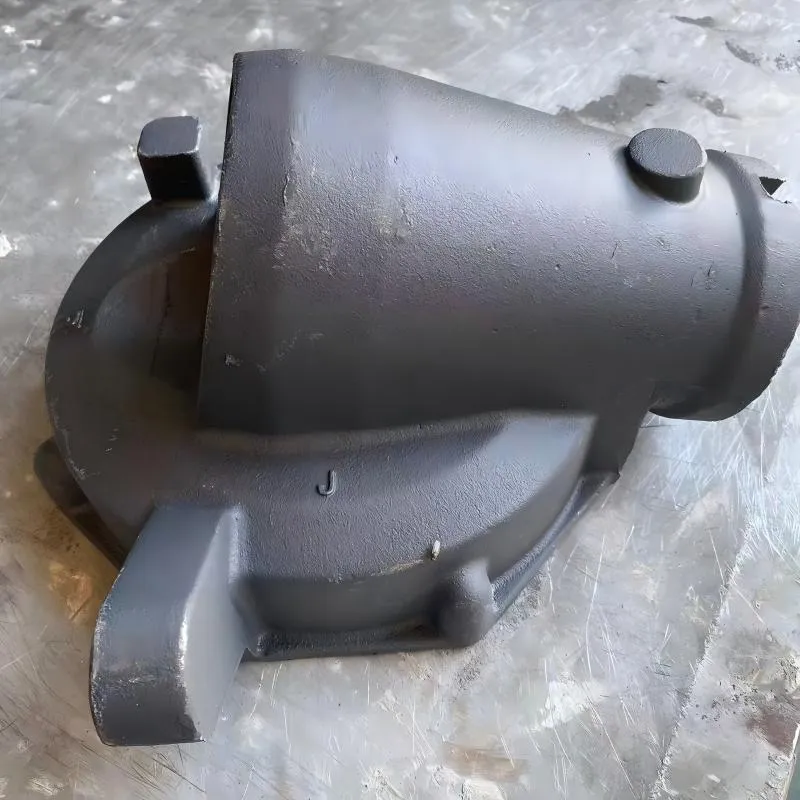
Under the termindividual production of cast iron componentsrefers to the cycle of creating metal products of a single or small-scale nature, where each batch or even a single part is manufactured to the specific technical requirements of the client. In 2026, this market segment has undergone a significant transformation due to the introduction of additive technologies in the creation of foundry models and automation of quality control.
The main difference from mass production lies in the economics of the process. With mass casting, major costs are amortized over millions of units, keeping the cost per part extremely low but requiring a huge upfront investment in permanent tooling. An individual order, on the contrary, involves:
- Production of temporary or permanent equipment for a specific drawing.
- Flexible adjustment of alloy chemical compositions (modification).
- No need to purchase excess goods (Just-in-Time logistics).
- Possibility of making engineering changes between batches.
For the B2B sector, this means moving from a “buy what you have” strategy to a “make what you need” strategy. This is especially true for mechanical engineering, energy and heavy equipment, where the failure of a standard part can lead to line downtime costing millions of rubles.
Key technological processes of 2026
Modern foundry production uses several basic methods, the choice of which directly affects the final price and surface quality:
- Casting in sand-clay molds (Green sand mixture).The most affordable method for large parts (from 50 kg). Provides good gas permeability, but requires subsequent mechanical processing due to surface roughness Ra 12.5–25.
- Casting using burnout models (V-process).Used for medium batches. Allows you to obtain a cleaner surface and higher accuracy, reducing the volume of chips during further turning or milling.
- Casting in cold-rolled self-hardening mixtures (HKS/No-Bake).Standard for critical parts with complex configurations. Provides high dimensional stability and minimal casting stresses, which is critical for pump and gearbox housings.
- Centrifugal casting.Used exclusively for pipes, sleeves and bushings. The metal structure turns out to be non-porous and homogeneous, which increases the pressure of the maintained medium to 16–25 MPa.
Where custom production is used: industry cases and experience of market leaders
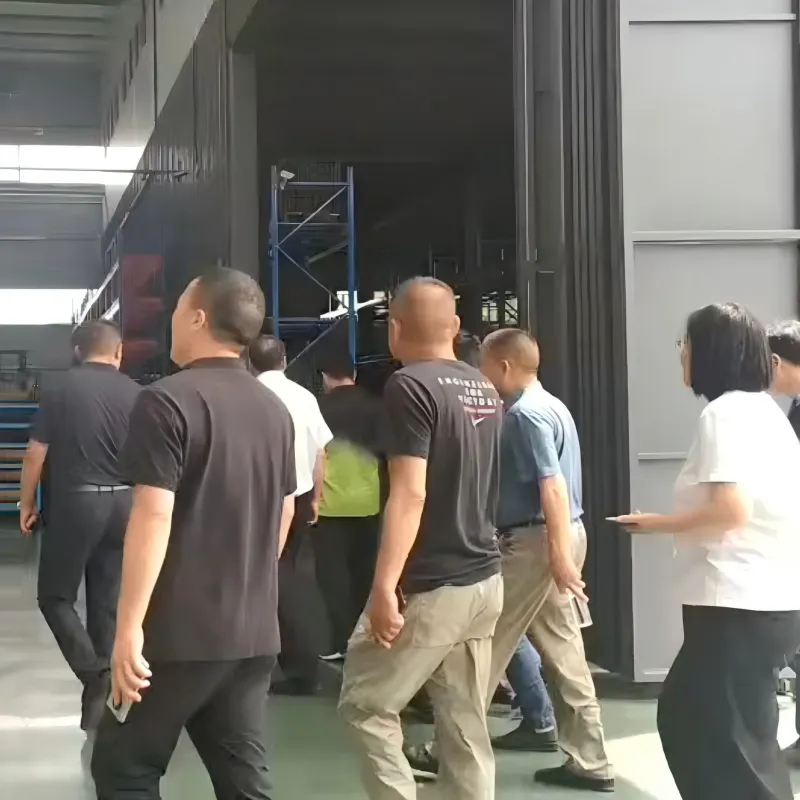
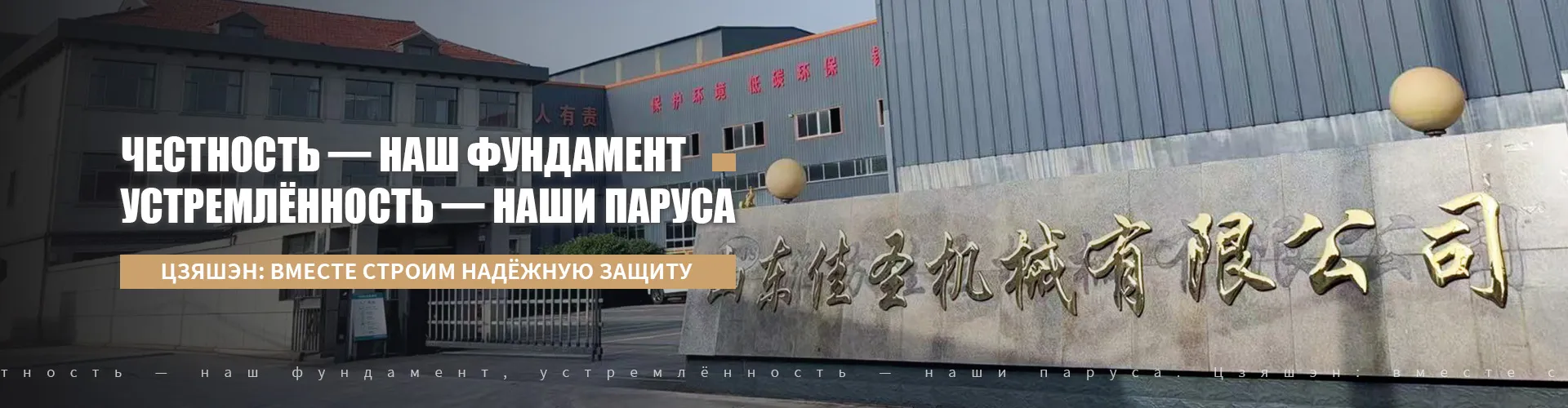
Request forindividual production of cast iron componentsformed by various industrial sectors. Understanding the specifics of the application helps to correctly formulate technical requirements (TOR) and choose the optimal grade of material. A striking example of the successful integration of high casting technologies into specialized production is the company’s experienceShandong Jiasheng Machinery Manufacturing Co., Ltd..
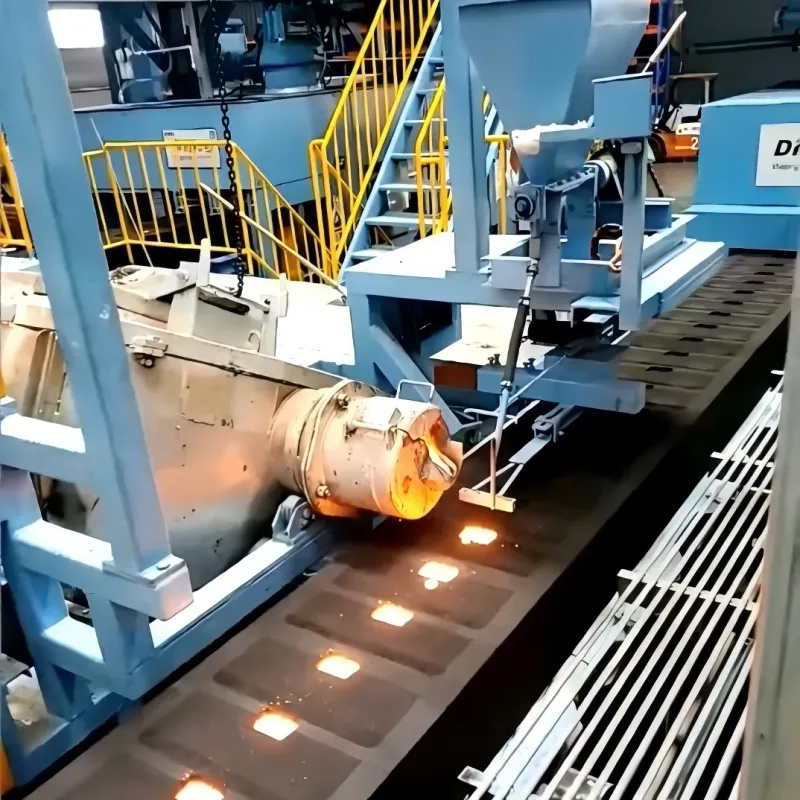
Located in Weifang, Shandong Province, the facility builds on the expertise of Weifang Jiasheng Co., Ltd. (since 2009) and demonstrates how specialization in ductile iron (DC/QT450-12) can create ultra-reliable components for critical systems. The production base, covering an area of over 10,000 m², is equipped with advanced automatic molding lines Disa416 and Benchuan 418, as well as intelligent mixture preparation systems. The annual production volume of 11,000 tons is achieved thanks to strict control of all stages: from melting in energy-saving electric furnaces to finishing electrostatic painting.
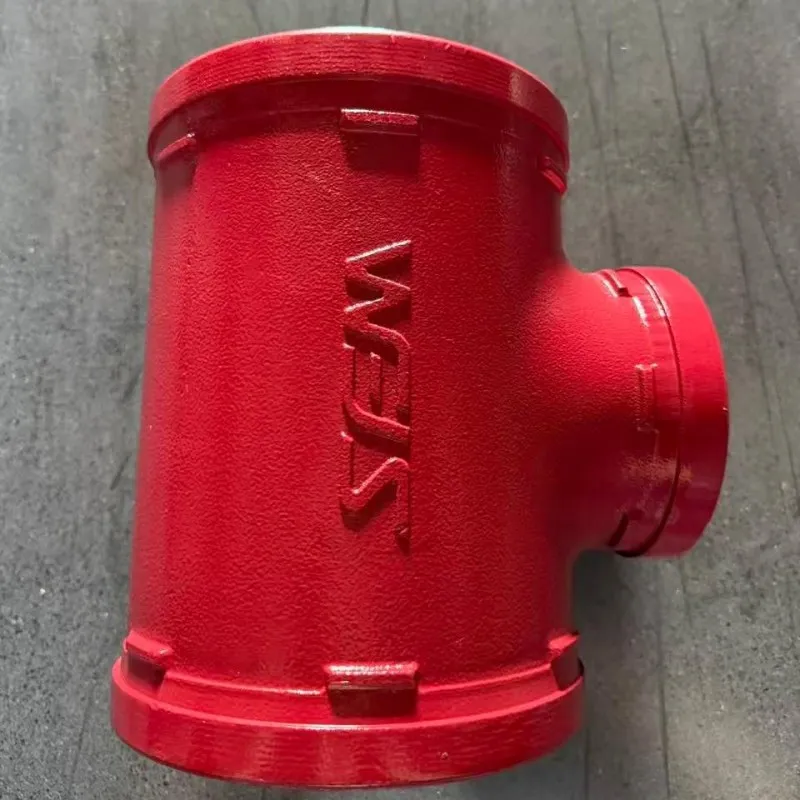
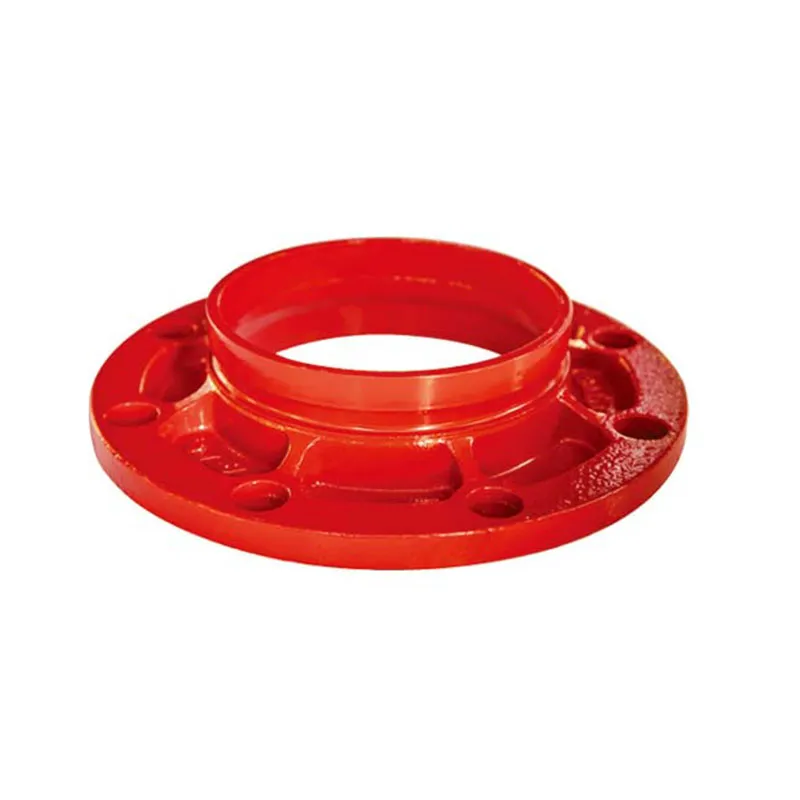
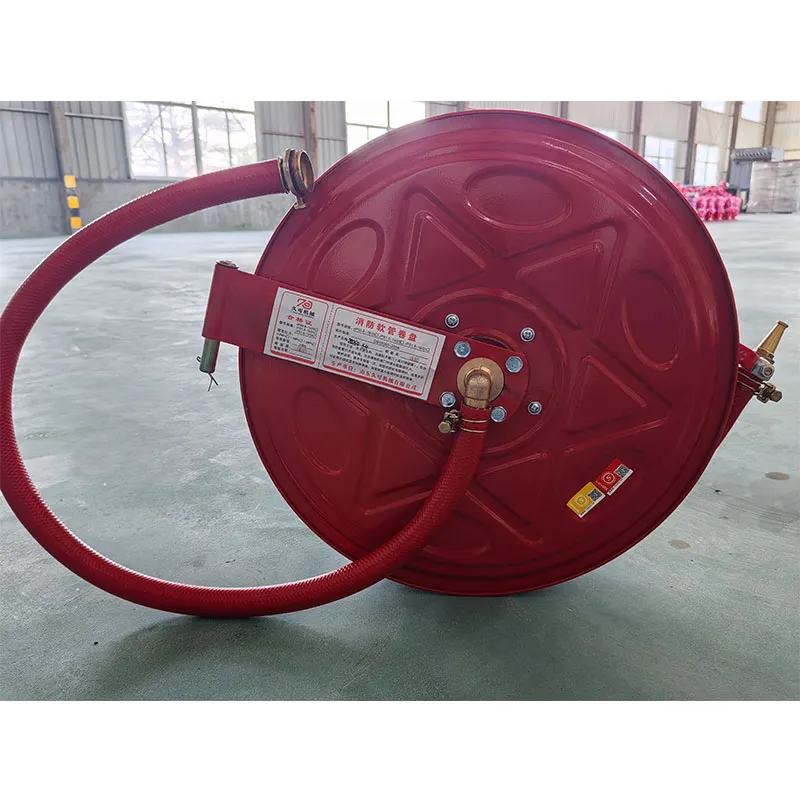
Shandong Jiasheng products, including groove fittings, sprinkler systems (ZSFY, ZSTMB-T80, ESFR) and fire hydrants, operate under pressure up to 2.5 MPa. The company's success is due not only to the presence of CCCF certificates and compliance with GB5135.11 standards, but also to the ability to adapt casting parameters to stringent requirements for tightness and vibration resistance. The use of EPDM rubber seals and 8.8 grade fasteners in combination with high-quality casting of the body shows how important an integrated approach is to the production of cast iron components for water supply and fire extinguishing systems.
Energy and turbine construction
Temperature resistance and vibration damping are critical in this industry. Cast iron turbine casings, generator supports and foundation slabs are made of gray cast iron SCh20–SCh25. Example: replacing a worn pump housing for a power plant at a thermal power plant. The standard part is not suitable due to changed flow parameters after upgrading the unit. Custom casting made it possible to change the geometry of the flow path, increasing the efficiency of the pump by 3.5% at a working fluid temperature of up to 120°C.
Mining and metallurgy
The main enemies here are abrasive wear and shock loads. High-chromium cast irons or cast iron with nodular graphite (VCh50, VCh60) are used. Typical task: making a crusher beater or mill lining. The service life of the standard part was 400 hours. After individual design with an increase in wall thickness in areas of maximum wear and alloying with chromium (up to 1.5%), the service life of the unit increased to 650 hours, which reduced downtime for repairs by 20%.
Machine tool building and robotics
CNC machine beds and robotic arm bases require a material with a high coefficient of internal friction (damping). Gray cast iron SCh15–SCh20 is indispensable here. Custom production allows the creation of complex internal channels for cooling spindles or routing cables directly into the body of the casting, which is not possible with a welded steel structure.
Price formation factors in 2026
Costindividual production of cast iron componentsis not a linear function of weight. In 2026, pricing consists of the following components, each of which is subject to optimization:
| Parameter | Impact on cost | Engineer's comment |
|---|---|---|
| Casting weight | Base multiplier | The smaller the part, the higher the price per kg due to the fixed costs of melting and forming. |
| Difficulty factor | +15% … +60% | The presence of thin walls (< 5 mm), internal cavities, threaded holes in the casting. |
| Accuracy according to GOST/ISO | +10% … +30% | Moving from CT12 to CT8 accuracy class doubles the cost of tooling and inspection. |
| Batch size | Inversely proportional | Lot 10 pcs. will cost 2-3 times more per unit than a batch of 1000 pieces. |
| Post-processing | +20% … +50% | Heat treatment (annealing, hardening), tumbling, painting, machining. |
What's hidden in the estimate?
Often customers pay attention only to the price of the metal, forgetting about the cost of the model. Custom production often uses 3D printing of sand molds or lost wax models, eliminating the cost of expensive metal tooling for the first samples. However, if the circulation exceeds 500 pieces, the production of an aluminum or steel model plate becomes economically justified, reducing the cost of each unit by 15–20%.
Calculation example:Casting “Gearbox housing”, weight 45 kg, material VCh40, batch of 20 pcs.
— Cost of metal and smelting: 180 rubles/kg.
— Production of a 3D model for casting: RUB 25,000 (one-time).
— Molding and filling: 60 rub/kg.
— Heat treatment and cleaning: 40 rubles/kg.
Total per unit: ~14,500 rub. When the batch increases to 100 pcs. the price will drop to ~12,800 rubles due to depreciation of the model.
How to Select a Supplier: E-E-A-T Criteria for Industrial Purchasing
Selecting a contractor forindividual production of cast iron componentsshould be based on a test of technical competence, and not just on price. In the conditions of 2026, the market is oversaturated with intermediaries who do not have their own production. To avoid risks, use the following checklist:
- Having our own laboratory.The supplier is obliged to conduct spectral analysis of the melt and mechanical tests of witness samples. Request tensile and hardness (Brinell) test reports for your batch.
- Equipment park.Find out what molding methods are available. The presence of HWS, Disa or analogue lines indicates the possibility of working with high accuracy. Not having your own furnaces (induction or cupola furnaces) is a red flag.
- Engineering department.The supplier's ability to conduct DFM (Design for Manufacturing) analysis. A good engineer will point out places where the wall thickness is not enough to fill the mold, or suggest adding casting slopes where you did not provide them.
- Reference list and certification.Request examples of similar parts. The presence of ISO 9001, ISO 14001 certificates and industry approvals (for example, fire safety or pressure) confirms the maturity of the processes. For example, products from manufacturers such as Shandong Jiasheng undergo strict type tests in national quality control centers, which is a guarantee of reliability for the end consumer.
Logistics and export restrictions
When working with manufacturers in 2026, it is important to consider logistics. Cast iron castings have a high specific gravity, so the cost of delivery can be up to 15–20% of the cost of the cargo. It is optimal to choose a manufacturer within reasonable transport accessibility or work with companies that have established supply channels and OEM support. Also check the availability of certificates of conformity (TR CU, GB, UL, etc.) for your products if they are subject to mandatory certification.
Comparison of materials: Which cast iron should you choose?
The wrong choice of cast iron grade is the most common cause of premature failure of a part. Below is a comparison of the main types of cast iron used in custom manufacturing.
| Cast iron grade | Graphite structure | Tensile strength (MPa) | Main Application | Machinability |
|---|---|---|---|---|
| SCh15, SCh20 (Gray) | Lamellar | 150–200 | Frames, housings, covers, brake discs. | Excellent |
| HF40, HF50 (High Strength) | Globular | 400–500 | Crankshafts, gears, pressure pipes, parts with shock loads, fittings. | Good (requires quality tools) |
| KCH30-6 (Magicable) | Flaky | 300 | Fittings, hooks, rear axle housings, small parts of complex shape. | good |
| Antifriction (ASF) | Lamellar + additives | Depends on the base | Sliding bushings, guides, bearings. | Average |
Engineering opinion:It is not always worth overpaying for high-strength cast iron. If a part is subject to compression and vibration (for example, a machine support), gray cast iron SCH20 will cope better due to its damping properties. HF has less internal friction, which can lead to resonance in some designs. However, for pressurized systems (as is the case with fire extinguishing products), VCh40-12 is the only reliability standard.
Typical mistakes when ordering castings
An analysis of defective batches over the past 3 years has revealed the following system errors from customers:
- Ignoring shrinkage.The drawing of the part is made without taking into account casting shrinkage (for cast iron 0.8–1.2%). The model maker makes the model larger, but if the designer has not agreed on the allowances, the dimensions may “float away” after heat treatment.
- Insufficient fillet radii.Sharp corners inside the casting create stress concentrations and lead to cracks during cooling. The minimum radius should be at least 3–5 mm.
- Incorrect indication of filming locations.The customer requires an ideal surface where marks from the rods or gating system are located. It is necessary to determine in advance the “non-working” areas for placing elements of the casting system.
- No requirements for non-destructive testing (NDT).For critical parts, be sure to indicate the need for ultrasonic testing (ultrasonic testing) or penetrant flaw detection. External appearance does not guarantee the absence of internal sinks.
FAQ: Frequently asked questions about custom casting
Q: What is the minimum circulation forindividual production of cast iron components?
A: It is technically possible to produce 1 piece. However, it is economically feasible to start from 5–10 pieces in order to distribute the costs of pre-production and smelting. For 3D printing of forms, the minimum batch can be a single one.
Q: Is it possible to obtain a casting immediately with the required accuracy class, without machining?
A: Yes, when using CCS or lost wax casting methods, accuracy classes CT7-CT8 can be achieved. However, functional surfaces (bearing seats, seals) still require grinding or turning to achieve the required roughness Ra 1.6–3.2.
Q: How long does it take to develop a new model?
A: Creating a 3D model and printing it for casting takes 3-5 days. Production of a traditional wooden or aluminum model - from 10 to 20 days. The total period for receiving the first sample (“first chip”) is usually 20–25 days.
Q: Does seasonality affect prices and terms?
A: Yes. During the summer months, demand for casting is traditionally higher, and the efficiency of molding lines can be reduced due to sand drying temperature conditions. Plan large orders for the first and fourth quarters.
Conclusion and recommendations for placing an order
Individual production of cast iron componentsin 2026 - this is not just a purchase of metal, but an engineering partnership. The success of the project depends on the quality of the initial data (STEP/IGES 3D models, clear specifications) and the choice of technology adequate to the purpose of the part. Savings at the stage of model design or quality control of raw materials inevitably leads to increased costs at the stage of equipment operation.
To reduce risks we recommend:
- Order a trial batch before launching the series.
- Require the provision of a chemical analysis of each heat.
- Use a single supplier for complex assemblies to avoid problems with assembling dissimilar parts.
- Pay attention to the presence of automated lines and environmental control systems at the manufacturer (ISO 14001), which indicates stability of quality.
If you need to calculate the cost of castings based on your drawings, analyze the possibility of casting, or select an analogue of an imported part, our engineers are ready to conduct a free audit of technical documentation.
Ready to discuss your project?
Send drawings or 3D model for preliminary cost and time estimate. We provide a full cycle: from modeling to delivery of finished parts.
→Receive a commercial offer and technical advice